

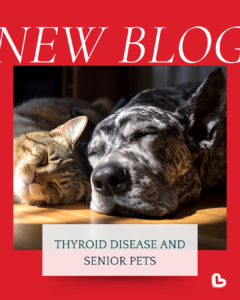
Thyroid disease is one of the most common hormonal conditions we see in senior pets — and it’s something that has hit close to home here at Laber of Love. One of our current fospice dogs, Raymond, has hypothyroidism, and two of our board members’ senior cats, Olivia and Amelia, have both been treated for hyperthyroidism. Between Raymond’s daily medication routine and watching Olivia and Amelia go through their treatment journey, we’ve learned a lot — and we want to share it with you.
Here’s the thing about thyroid disease: it almost always affects cats and dogs in opposite ways. Understanding the difference can help you catch it early and get your pet the help they need.
Thyroid Goes into Overdrive
Hyperthyroidism is the most common hormonal disorder in older cats. It occurs when the thyroid gland produces too much thyroid hormone, essentially sending the body into overdrive.
Signs to watch for:
Unexplained weight loss despite a ravenous appetite
Increased thirst and urination
Hyperactivity, restlessness, or vocalizing more than usual
Vomiting or diarrhea
A dull, unkempt coat
Rapid or irregular heartbeat
Both Olivia and Amelia underwent I-131 treatment. The procedure involves a single injection of radioactive iodine that destroys the overactive thyroid tissue. They each stayed at the treatment facility until their radiation levels fell low enough to come home. It sounds intimidating, but for many cats it is a one-time treatment with no ongoing medication needed.
What to do: If your cat is over 10 years old, make sure they are getting senior bloodwork every six months. Hyperthyroidism is very treatable through I-131 treatment or medication when caught early.
When the Thyroid Slows Things Down
While cats tend to develop an overactive thyroid, dogs are far more likely to develop an underactive one. Hypothyroidism means the thyroid isn’t producing enough hormone, which slows down the body’s metabolism.
Signs to watch for:
Unexplained weight gain without increased food intake
Lethargy and general sluggishness
Cold intolerance — seeking warmth more than usual
Skin and coat changes: dry skin, hair loss (often on the trunk and tail), a dull coat
Ear infections that keep coming back
Raymond’s skin looks dramatically better with his thyroid supplement! Like cats, this conditioni s thankfully very treatable.
Treatment: Hypothyroidism is treated with a daily oral medication called levothyroxine (Soloxine or Thyro-Tabs). It’s inexpensive, easy to give, and most dogs respond beautifully within a few weeks. Raymond is a great example — with consistent medication, he has become more energetic, his coat has improved, and he’s just a happier dog overall.
Dogs on levothyroxine typically need bloodwork every 6–12 months to make sure the dosage remains correct. The thyroid levels need to be checked at a specific time after giving the medication, so be sure to follow your vet’s instructions on timing.
What to do: If your dog is gaining weight without explanation, seems unusually tired, or has recurring skin or ear issues, ask your vet about thyroid testing. It’s a simple blood test that can change your dog’s quality of life significantly.
The Bottom Line
Thyroid disease is one of those conditions that can sneak up slowly — which is exactly why it’s so important to keep up with your senior pet’s wellness exams and lab work. Raymond, Olivia, and Amelia are all living proof that with the right diagnosis and treatment, pets with thyroid disease can thrive.
If anything in this post sounds familiar, please reach out to your veterinarian. These conditions are very treatable — your pet doesn’t have to struggle.
Ken Brunson DVM, Board Member